
Solar
Things to Consider Before Installing Solar Panels in Pakistan
A practical guide for Pakistani homeowners comparing solar system types, capacity, climate, safety, installation quality, warranties and long-term support.
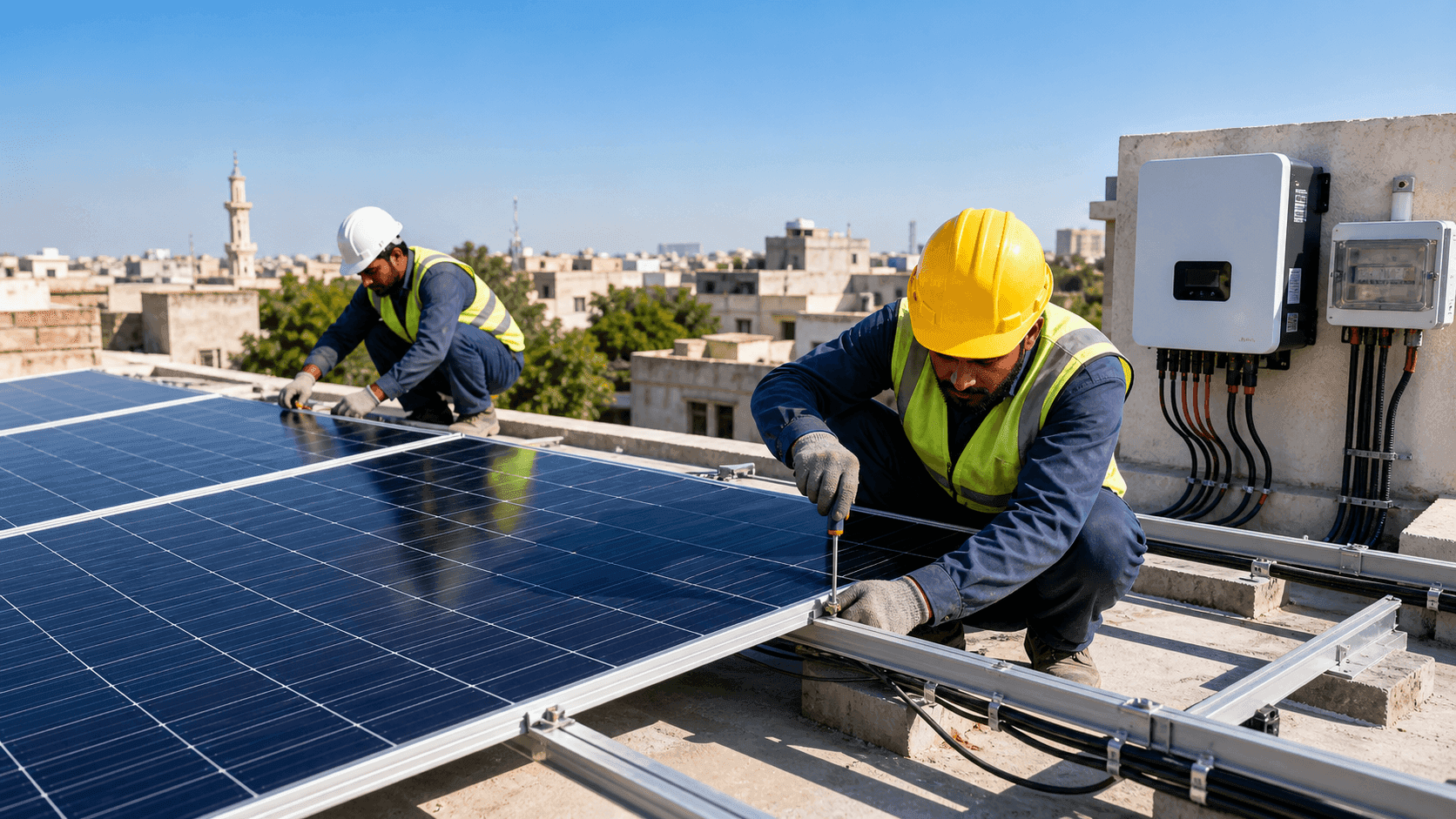
If you are reading this, chances are you are tired of high electricity bills, frustrated with load shedding, or both. You have probably heard neighbors talking about going solar, seen panels on rooftops around your area, and wondered if it is time to make the switch yourself.
Solar energy is becoming increasingly popular across Pakistan, from Karachi to Lahore, Islamabad to Peshawar. But before you hand over your hard-earned money to a solar dealer, there are some important things you need to know. This is not about scaring you away from solar. It is about making sure you make a smart, safe investment that actually delivers the benefits you are hoping for.
If you are still estimating your load, start with the solar system size calculator and then use this guide to check the practical buying decisions.
Table of Contents
- Why Solar Matters in Pakistan
- How Pakistan's Climate Affects Your Panels
- Choosing the Right System Type
- Sizing Your System Correctly
- Quality, Certification and Counterfeit Risk
- Installation Quality
- Electrical Safety Essentials
- Cost, ROI and Payback
- Warranty, Maintenance and Support
- Final Decision Checklist
- Frequently Asked Questions
Why Solar Matters in Pakistan
Pakistan's electricity situation has been challenging for years. If you are in an urban area, you might be paying anywhere from Rs. 25 to Rs. 65 per unit depending on your consumption slab, and those rates keep climbing. If you are running a small business, your commercial rates are usually even higher.
Then there is load shedding. While it has improved in some cities, many areas still face scheduled and unscheduled outages, especially during summer months when electricity is needed the most. Running a generator is expensive and noisy, and the diesel or petrol costs add up quickly.
Solar panels offer a way out. Once installed, sunlight is free. Your panels generate electricity during the day when the sun is shining, which Pakistan has plenty of. Over time, you can significantly reduce your electricity bills or even eliminate them entirely, depending on your system type.
But solar is a significant investment. A decent home system can cost anywhere from Rs. 300,000 to Rs. 1,500,000 or more, depending on capacity. That is not pocket change, so you need to approach this decision carefully, with your eyes open to both the benefits and the risks.
How Pakistan's Climate Affects Your Panels
Pakistan is blessed with abundant sunshine. Most areas get 5-7 hours of good sunlight daily, which is excellent for solar generation. But our climate also presents challenges you should understand before choosing panels, mounting structures and maintenance plans.
Punjab, including Lahore, Faisalabad and Multan: Dust is the main enemy. The dry climate means dust accumulates quickly on panels, reducing their efficiency. You may need to clean your panels every two weeks during dusty seasons. Some people install panels at a steeper angle to help dust slide off naturally, but periodic cleaning is still needed.
Karachi and coastal areas: Humidity and salt in the air can affect panels and electrical connections over time. Make sure your installer uses proper weatherproofing and corrosion-resistant materials. Occasional rain helps clean your panels, but exposed connectors still need protection.
Northern areas, including Peshawar, Abbottabad and Gilgit: You may deal with snow in winter, which can temporarily cover panels and stop generation. Factor in reduced winter output. Extreme temperature variation can also affect some components, so quality matters.
Balochistan, including Quetta and Gwadar: Extreme heat and cold can affect panel efficiency and component life. Strong winds in some areas mean your mounting structure needs to be extra secure.
The point is simple: Pakistan is not one uniform climate. Your location affects what type of panels you should buy, how they should be installed, and how much maintenance you will need.
Choosing the Right System Type
Not all solar systems are the same. There are three main types, and choosing the wrong one is one of the biggest mistakes buyers make.
On-Grid Systems
On-grid systems connect directly to your electricity company's grid. During the day, your panels generate electricity. Whatever you do not use immediately goes back to the grid, and your meter runs backward or gives credit through net metering. At night, you draw from the grid as usual.
Best for: Areas with reliable grid electricity and minimal load shedding, such as parts of Islamabad, Lahore and Karachi where the grid is mostly stable.
Pros:
- Usually cheaper because batteries are not required.
- Simpler system design.
- Excess electricity can be exported through net metering where available.
Cons:
- When the grid goes down, your solar system also shuts off for safety.
- It does not provide backup during load shedding unless batteries are added.
Off-Grid Systems
Off-grid systems are independent of the grid. Your panels charge batteries during the day, and you run your home from those batteries. You are essentially creating your own small power station.
Best for: Rural areas with no grid connection, or areas with severe load shedding where independence matters more than cost.
Pros:
- Total independence from the grid.
- Works during load shedding.
- No monthly electricity bill from grid use.
Cons:
- Expensive because batteries are costly.
- Batteries need replacement after several years.
- You must manage your consumption carefully.
Hybrid Systems
Hybrid systems combine grid connection with battery backup. During the day, panels power your home and charge batteries. Excess power may go to the grid. When load shedding hits, the system can switch to battery power.
Best for: Many Pakistani households that want bill reduction and backup during outages.
Pros:
- Backup during load shedding.
- Flexible use of solar, grid and batteries.
- Better comfort than a simple on-grid system in unreliable areas.
Cons:
- Most expensive option.
- More complex design.
- Batteries still need eventual replacement.
If you face frequent load shedding, a hybrid system often makes the most sense despite the higher cost. An on-grid system without batteries can reduce bills, but it will not keep your essential appliances running during outages.
Sizing Your System Correctly
This is where many people waste money or end up disappointed. You need to match your system size to your actual electricity consumption: not too small, and not unnecessarily large.
Solar panels are rated in watts or kilowatts. Your electricity bill shows consumption in kilowatt-hours, often called units. In Pakistan, a 1 kW solar system may generate roughly 4-5 kWh per day depending on location, panel angle, shading and season.
Here is a simple estimate:
- Check your monthly electricity units. Suppose your household uses 600 units per month.
- Divide by 30 to estimate daily consumption: 600 divided by 30 equals 20 kWh per day.
- Divide by average sun hours. Using 5 sun hours gives 20 divided by 5 equals a 4 kW system.
- Add a practical margin for losses and seasonal variation, so a 4-5 kW system may be suitable.
Practical examples:
| Home or business type | Typical monthly use | Rough solar size |
|---|---|---|
| Small home with basic appliances | 300-400 units | 2-3 kW |
| Average home with summer AC use | 500-700 units | 4-5 kW |
| Large home with multiple ACs | 1,000+ units | 7-10 kW |
| Small shop or office | Varies by load | 3-5 kW |
Do not size your system only from your highest summer bill unless you want to pay for capacity that sits underused for much of the year. Look at your average consumption across the year.
If you plan to add appliances, an extra AC, a water pump or an upstairs portion, include that expected load. But avoid oversizing just in case. Every extra kilowatt costs real money upfront.
For off-grid and hybrid systems, battery sizing is just as important as panel sizing. A common goal is enough battery capacity to run essential loads for one evening or one day without strong sun. This gets technical, so work with an installer who can show the calculation clearly.
Quality, Certification and Counterfeit Risk
Pakistan's solar market has quality issues. There are excellent products available, but there are also substandard panels, fake certifications and dealers who sell whatever gives them the best margin.
Look for established panel manufacturers with proven track records. Brands such as Canadian Solar, Jinko, Longi, JA Solar and Trina are commonly used and generally reliable when purchased through genuine channels. Some premium brands cost more, but the important point is authenticity and support.
Modern panels should usually be at least 18-21% efficient. Higher efficiency means more power from the same roof space. Do not obsess over a 1-2% difference, but avoid old or unusually low-efficiency panels unless the price and warranty clearly justify it.
Ask for certification documents and specification sheets. Useful certifications include:
- IEC 61215 for design qualification.
- IEC 61730 for safety qualification.
- ISO 9001 for quality management.
Good panels commonly come with a 25-year performance warranty and a 10-12 year product warranty. If someone offers only a short warranty on panels, be cautious.
Counterfeit and low-grade panels are a real risk. Some sellers import cheap panels and apply fake brand labels. Others sell rejected or B-grade panels without explaining the risk. Protect yourself by buying from authorized dealers, asking for original packaging and documentation, checking serial numbers where possible, and avoiding prices that look too good to be true.
Do not ignore the inverter. It converts DC power from panels into AC power for your home. Brands such as Growatt, Huawei, SMA and Fronius are commonly trusted, but model selection and support matter. A cheap inverter can fail early and wipe out the money you thought you saved.
For batteries, lithium batteries cost more but usually last longer and perform better than lead-acid batteries. Tubular lead-acid batteries can work if budget is tight, but ordinary automotive batteries are not designed for solar cycling and should be avoided.
Installation Quality
You can buy excellent panels and still get poor results if the installation is weak. Bad installation can reduce generation, damage your roof, create electrical faults or become a safety hazard.
A proper installation should include a roof assessment. The installer should check whether the roof can handle the mounting structure, identify shading from trees or nearby buildings, and recommend an angle and layout that works for your site.
Mounting structure matters. In Pakistan, strong winds and storms can put serious pressure on panels. Cheap mounting can bend, loosen or fail. Panels should not be treated like lightweight decoration; they are long-term rooftop equipment.
Electrical work is critical. Correct cable sizing, fuses, circuit breakers, isolators, weatherproof junction boxes and proper earthing are not optional extras. Water entering connections can cause failure or fire risk.
Panel tilt also matters. In many parts of Pakistan, a tilt around 25-30 degrees is a useful year-round starting point, though the best angle can vary by city and roof. Some installers lay panels flat because it is easier. That may reduce performance and increase dust buildup.
When choosing an installer:
- Ask for references and, if possible, visit a previous installation.
- Check how long the company has been installing solar systems.
- Ask what after-sales service they provide.
- Get system specifications, warranties, timeline and payment terms in writing.
- Avoid paying everything upfront. A staged payment plan is usually healthier.
Red flags include pressure tactics, no proper company address, vague answers, no references, and prices that are far below other quotes without a clear explanation.
Electrical Safety Essentials
Solar systems involve high-voltage DC electricity. A poorly installed system can cause electric shocks, fire or equipment damage. Safety needs to be treated as non-negotiable.
Proper earthing is absolutely critical. The panels, mounting structure and inverter should be properly grounded. This protects people from electric shock and helps reduce fire risk. In Pakistan, some installers skip or weaken this work to save cost. Do not accept that.
DC isolators allow the panels to be disconnected safely for maintenance and emergencies. AC and DC circuit breakers protect the system from overloads and short circuits. Surge protection devices help protect against lightning and grid surges, especially in storm-prone areas.
Common causes of solar fire risk include:
- Loose connections that create arcing.
- Undersized cables that overheat.
- Poor quality components.
- Water entering electrical boxes.
- Improper earthing.
Insist on qualified electrical work, proper cable sizes, secure terminations, weatherproof boxes, clear labels and a system diagram. If you notice burning smells, hot cables, exposed wiring, water inside boxes, constant inverter errors or unusual buzzing sounds after installation, call a qualified technician immediately.
Do not treat solar as a casual DIY job. Rooftop work and high-voltage DC electricity are a dangerous combination. Saving money on professional installation is not worth the risk to your family or property.
Cost, ROI and Payback
Solar is expensive upfront, but it can save money over time. The question is whether the numbers make sense for your home or business.
Approximate installed costs in Pakistan vary by brand, system type, battery choice and installer quality. As a broad guide:
| System type | Approximate installed cost |
|---|---|
| On-grid system | Rs. 80,000-120,000 per kW |
| Hybrid system | Rs. 150,000-200,000 per kW |
| Off-grid system | Rs. 180,000-250,000 per kW |
A typical 5 kW hybrid system might cost Rs. 750,000 to Rs. 1,000,000 depending on battery size and component choices.
Here is a simple payback example:
- You install a 5 kW hybrid system for Rs. 800,000.
- Your current electricity bill is Rs. 25,000 per month.
- Solar reduces it by 70%, to about Rs. 7,500 per month.
- You save about Rs. 17,500 per month.
- Rs. 800,000 divided by Rs. 17,500 gives a payback period of about 46 months, or roughly 4 years.
After payback, the system can continue producing electricity for many years, though you still need to budget for maintenance and eventual inverter or battery replacement.
Your return depends on electricity rates, system type, financing costs, net metering availability, battery replacement, maintenance, and future tariff increases. If you are paying high domestic slabs or commercial rates, payback is usually faster. If your monthly use is very low, payback can take longer.
Solar may not make sense if you are renting and may move soon, if your roof is heavily shaded, if your monthly usage is very low, if financing is unaffordable, or if no reliable installer is available in your area.
Warranty, Maintenance and Support
Solar panels are designed to last 25-30 years, but they are not maintenance-free. And when something goes wrong, local support matters.
Panel warranties usually include a long performance warranty and a shorter product warranty. But if the manufacturer has no meaningful support channel in Pakistan, claiming that warranty can be difficult. Ask whether the dealer handles warranty claims and how long the process normally takes.
Inverter warranties are often 5-10 years. Many inverters eventually need replacement after 10-15 years, so include that in your long-term cost thinking. Batteries are usually the weakest link in hybrid and off-grid systems. Lithium batteries may have longer warranties than lead-acid batteries, but both need proper use and monitoring.
Regular maintenance includes:
- Panel cleaning every 2-4 weeks depending on dust, rain and location.
- Visual checks for loose cables, cracks, corrosion and debris.
- Monitoring inverter error messages and generation patterns.
- Annual professional servicing for electrical connections, earthing, inverter performance and battery health.
Before buying, ask the installer:
- Do you have a service center in my city?
- What is your response time for service calls?
- Do you keep spare parts locally?
- What are your service charges?
- Can I reach technical support through phone, WhatsApp or office visit?
Reduced output is often caused by dust, shading or a loose connection. Inverter errors may point to grid issues, wiring faults or inverter problems. Battery charging problems may come from settings, age or connection issues. For electrical problems, call a qualified technician.
Final Decision Checklist
Use this checklist before you commit:
- Calculate your actual electricity consumption and required system size.
- Decide whether on-grid, off-grid or hybrid fits your area and load shedding situation.
- Set a realistic budget including batteries, installation and financing costs.
- Get at least three quotes from different installers.
- Check references and previous installations where possible.
- Verify panel and inverter certifications and warranties.
- Confirm proper earthing, breakers, isolators and surge protection.
- Understand the warranty terms and claim process.
- Check whether net metering is available in your area.
- Verify your roof structure, angle and shading.
Questions to ask installers:
- How long have you been installing solar systems?
- Can you provide references from customers in my area?
- What brands do you recommend and why?
- What is included in the quoted price?
- How long will installation take?
- What warranties do you provide?
- What after-sales support do you offer?
- Who handles warranty claims?
- What payment structure do you use?
- Can you provide a detailed system design and layout?
Warning signs include pressure to decide immediately, vague quotations, weak warranty answers, no references, no proper office, very low pricing, and suggestions to skip earthing or other safety measures.
Good signs include a proper site survey, itemized quotation, patient answers, references, honest pros and cons, clear support terms, reasonable payment structure and complete system documentation.
Final Thoughts
Going solar in Pakistan can be an excellent decision. It can reduce electricity bills, provide backup during load shedding and give you more energy independence. But it is a major investment that needs careful planning.
Do not rush. Take time to understand your needs, research your options and find a reliable installer. Ask questions. Visit installations. Read reviews. Get multiple quotes.
The cheapest option is rarely the best option. You are making an investment that should last more than 20 years. Spending a little more on quality components, proper safety work and professional installation can save money and stress later.
And do not compromise on safety. Proper earthing, correct wiring and quality protection devices are not optional upgrades. They protect your family, your property and your investment.
Frequently Asked Questions
How many solar panels do I need for a home in Pakistan?
It depends on your monthly units, roof space, panel wattage and system losses. A small home may need a 2-3 kW system, while an average home using 500-700 units per month may need around 4-5 kW. Use your annual average consumption, not only your highest summer bill.
Is on-grid or hybrid solar better in Pakistan?
On-grid solar is cheaper and works well where grid electricity is reliable. Hybrid solar costs more but provides backup during load shedding. For many Pakistani homes that face outages, hybrid is more practical despite the higher upfront cost.
How often should solar panels be cleaned in Pakistan?
In dusty areas such as Lahore, Faisalabad and Multan, panels may need cleaning every two to four weeks. Coastal areas may get some natural cleaning from rain, but humidity and salt make connection protection important.
What is the payback period for solar in Pakistan?
Many homes see payback in roughly 3-6 years, depending on electricity rates, system type, battery cost, financing and actual generation. On-grid systems usually pay back faster than hybrid systems because they do not require batteries.
What should I check before choosing a solar installer?
Check references, previous installations, company address, itemized quotation, warranty terms, after-sales support, earthing details, cable sizes, breaker protection and payment structure. Avoid installers who pressure you, avoid technical answers or suggest skipping safety work.
Are batteries necessary for solar panels in Pakistan?
Batteries are not necessary for every system. On-grid solar can reduce bills without batteries, but it will not provide backup during load shedding. If backup power is important, a hybrid or off-grid system with batteries is needed.
Final check
Conclusion
- A practical guide for Pakistani homeowners comparing solar system types, capacity, climate, safety, installation quality, warranties and long-term support.
- If you are reading this, chances are you are tired of high electricity bills, frustrated with load shedding, or both. You have probably heard neighbors talking about going solar, seen panels on rooftops around your...
- Solar energy is becoming increasingly popular across Pakistan, from Karachi to Lahore, Islamabad to Peshawar. But before you hand over your hard-earned money to a solar dealer, there are some important things you need...
Use a related tool
Run an estimate, then confirm serious decisions with qualified professionals.