
Iraq Ziyarat
Arbaeen Walk Guide: Najaf to Karbala for First-Time Pilgrims
A practical Arbaeen walk guide for first-time Pakistani pilgrims covering the Najaf to Karbala distance, mawkeb support, heat safety and preparation.
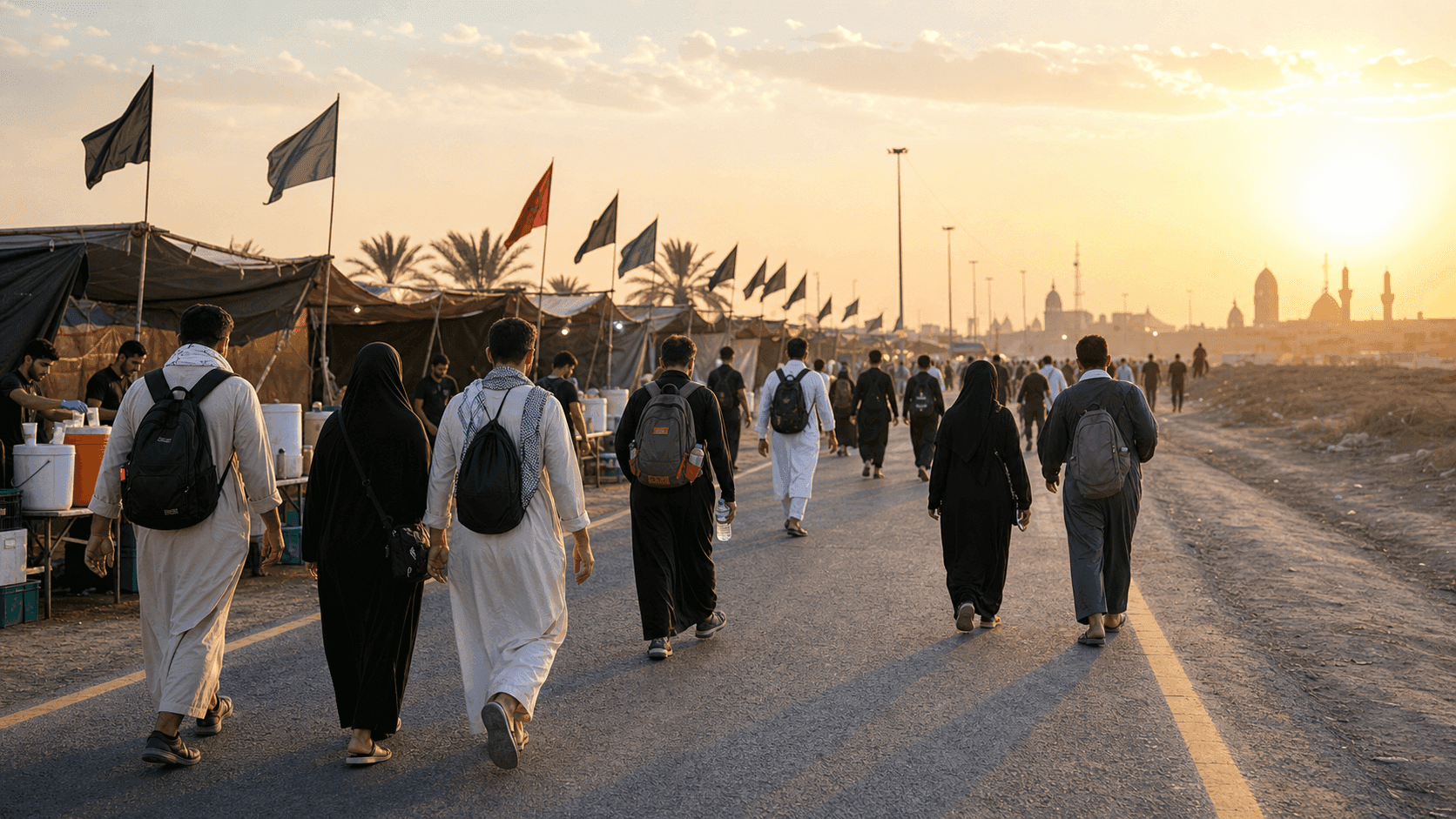
The Arbaeen walk from Najaf to Karbala is widely described as the largest annual gathering of people anywhere in the world, with pilgrims from Pakistan, Iran, India and dozens of other countries covering roughly 80 kilometers on foot to reach the shrine of Imam Hussain (A.S.) on the fortieth day after Ashura.
For a first-time walker, the scale can feel overwhelming to plan around. This Arbaeen walk guide breaks down the distance, the support network along the route, and how to prepare so the walk is manageable rather than exhausting. Once you land in Iraq, the Iraq Ziyarat guide covers the rest of the trip, from visa rules to shrine etiquette.
Quick Answer
The Arbaeen walk covers about 80 kilometers between Najaf and Karbala, and most pilgrims complete it in around three days, though anywhere from two to four days is common depending on pace and rest stops, walking mainly in the evening and overnight to avoid peak daytime heat. Thousands of volunteer-run mawkebs along the route provide free food, rest areas and basic medical care, so pilgrims do not need to carry days of supplies. Preparation matters more than gear: broken-in shoes, some walking training beforehand, and pacing yourself with regular breaks make the biggest difference. Arbaeen falls on 20 Safar, the fortieth day after Ashura; in 2026 that date is Tuesday, August 4, so set your walking schedule to reach Karbala with at least a day to rest before the peak crowds arrive.
The Route, Distance and Typical Timing
The main walking route runs from Najaf, near the shrine of Imam Ali (A.S.), to Karbala, home to the shrine of Imam Hussain (A.S.) and his brother Hazrat Abbas (A.S.), a distance of roughly 80 kilometers or about 50 miles. Most pilgrims complete this in about three days, breaking the distance into daily stages rather than walking continuously, though some walk faster over two days and others take up to four. The walk builds toward Arbaeen itself, 20 Safar on the Islamic calendar and the fortieth day after Ashura, when the crowd in Karbala reaches its peak, so plan your walking schedule to arrive with enough time to rest before the main day. Since the Islamic calendar is lunar, the Gregorian date shifts back by about 10 to 11 days each year; check the confirmed date for your travel year with your group operator rather than assuming it matches a previous trip.
Mawkebs: The Support System That Makes the Walk Possible
One detail that surprises many first-time walkers is how little they need to carry. Thousands of volunteer-run mawkebs line the entire route, offering free food, tea, resting mats, phone charging, foot massages and basic medical care to anyone walking past, day and night. This hospitality is a central part of the Arbaeen tradition, offered as an act of devotion rather than a paid service, so accept it graciously rather than trying to avoid relying on it. Knowing mawkebs are constantly available also changes how you pack: a light daypack with water and snacks between stops is enough, rather than carrying multiple days of supplies.
Managing Heat, Pace and Fatigue
Daytime temperatures during Arbaeen can climb well above 40 degrees Celsius, which is why many pilgrims shift their walking to the evening and night, resting through the hottest hours of the day. Sip water regularly rather than drinking a large amount at once, cover your head with a cap or scarf, and take a proper rest break every few hours instead of pushing through exhaustion. Pacing yourself matters more than speed here; the goal is to arrive in Karbala able to properly take part in Ziyarat, not to finish the walk as quickly as possible.
Preparing Your Body and Your Feet
The single most common mistake first-time walkers make is wearing new, unbroken-in shoes. Blisters and foot pain end more people's walks early than heat or distance. In the weeks before your trip, walk 10 to 15 kilometers a day to build endurance, and wear the exact shoes or sandals you plan to walk in so your feet are already used to them. Pack a spare pair of socks and basic blister care, and change socks if your feet get wet, since damp socks over long distances are a common cause of blisters.
Frequently Asked Questions
Do I need to walk the entire 80 kilometers to take part in Arbaeen?
No. Many pilgrims walk only a portion of the route and use transport for the rest, particularly first-timers, older pilgrims or anyone with health concerns. Walking any distance as part of the tradition is meaningful; there is no requirement to complete the full stretch on foot.
Is it safe to walk at night during Arbaeen?
The main route is heavily used and well supported by mawkebs even overnight, and many pilgrims specifically choose night walking to avoid daytime heat. Stay with your group rather than walking alone, and keep your phone charged with your group leader's number saved.
What should I do if I get blisters or feel unwell during the walk?
Stop at the nearest mawkeb. Basic medical care, rest areas and first aid are available continuously along the route, and volunteers are used to helping pilgrims with exactly these issues. Do not push through pain to the point of worsening an injury; resting and continuing later, or switching to transport for a stretch, is a normal part of many pilgrims' walk.
Preparation, pacing and relying on the mawkeb network are what make the Arbaeen walk achievable for pilgrims of very different ages and fitness levels every year. Combine this guide with the Arbaeen walk category in the full Iraq Ziyarat guide for a checklist you can review before you set out.
Final check
Conclusion
- A practical Arbaeen walk guide for first-time Pakistani pilgrims covering the Najaf to Karbala distance, mawkeb support, heat safety and preparation.
- The Arbaeen walk from Najaf to Karbala is widely described as the largest annual gathering of people anywhere in the world, with pilgrims from Pakistan, Iran, India and dozens of other countries covering roughly 80...
- For a first-time walker, the scale can feel overwhelming to plan around. This Arbaeen walk guide breaks down the distance, the support network along the route, and how to prepare so the walk is manageable rather than...
Use a related tool
Run an estimate, then confirm serious decisions with qualified professionals.