
Iraq Ziyarat
Karbala Najaf Ziyarat Itinerary for First-Time Pilgrims
A practical Karbala Najaf Ziyarat itinerary for first-time Pakistani pilgrims, covering gateway airports, shrine order, timing and nearby holy sites.
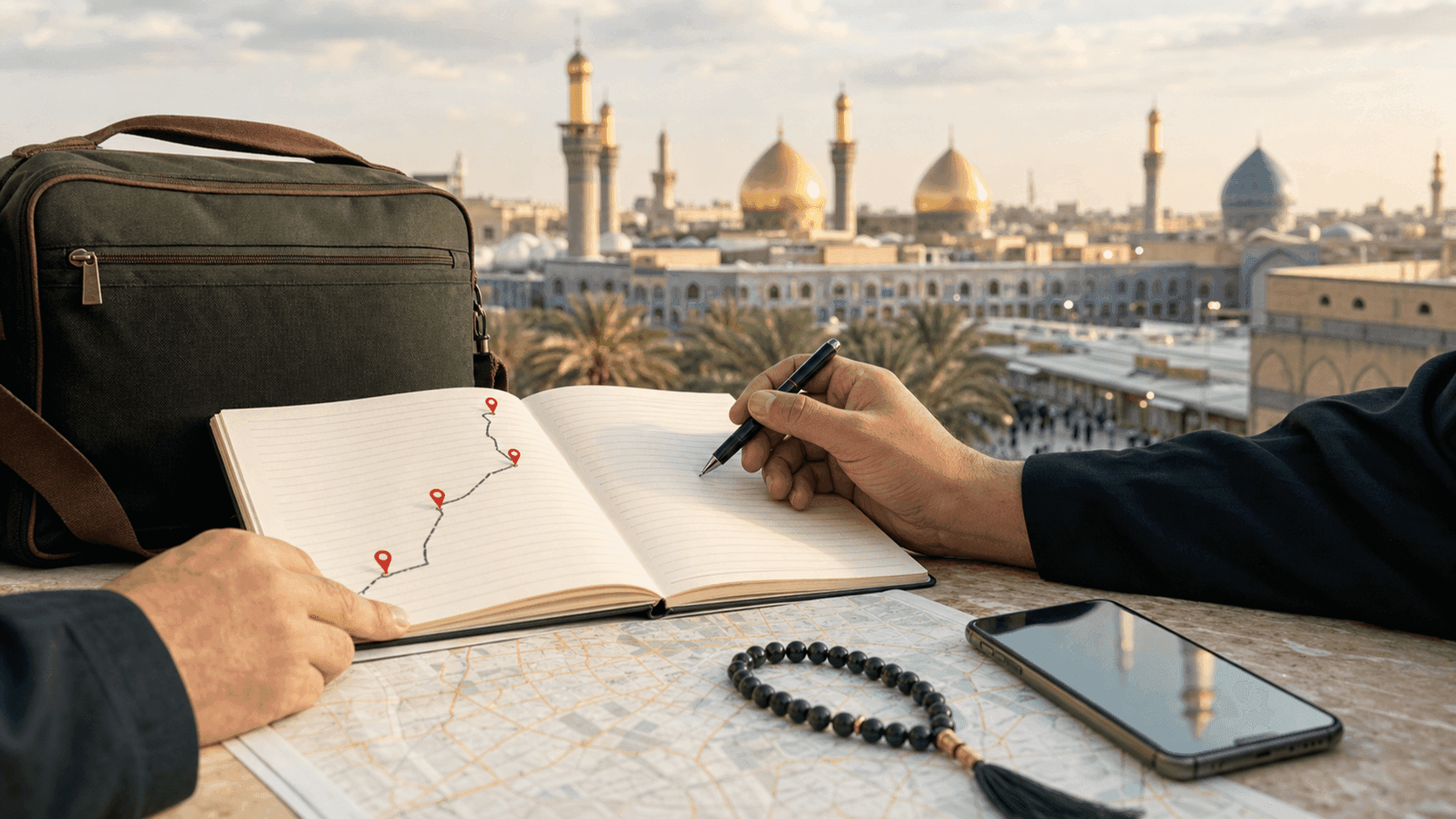
First-time pilgrims planning a trip to Iraq are often unsure how to sequence their visits between Najaf, Karbala, Kadhimiya and Samarra, or how many days to set aside. Unlike a typical holiday itinerary, a Ziyarat trip is shaped by which Imam is buried where, and by which gateway airport gets you there most directly.
This Karbala Najaf Ziyarat itinerary lays out a sensible order for a first trip, along with realistic timing for each stop. Pair it with the full Iraq Ziyarat guide for visa, packing and safety details once your route is set.
Quick Answer
A first Karbala Najaf Ziyarat itinerary typically starts in Najaf, home to the shrine of Imam Ali (A.S.), with a short trip to nearby Kufa, then continues to Karbala for the shrines of Imam Hussain (A.S.) and Hazrat Abbas (A.S.). Pilgrims who want to cover Kadhimiya and Samarra add a Baghdad leg for the shrines of Imam Musa al-Kadhim (A.S.), Imam Muhammad al-Taqi (A.S.), Imam Ali al-Hadi (A.S.) and Imam Hasan al-Askari (A.S.). Seven to ten days is a comfortable range for all four cities; four to five days works if you focus only on Najaf and Karbala.
Choosing Your Gateway Airport
Najaf International Airport (NJF) is the most commonly used gateway for Ziyarat trips, since it sits closest to both Najaf and Karbala, which are roughly 80 kilometers apart. Baghdad International Airport (BGW) is a better fit if Kadhimiya and Samarra make up a larger part of your plan, or if your flight options and connections work out better through Baghdad. Many group operators default to Najaf for pure Karbala-Najaf trips and to Baghdad for longer itineraries that include the northern shrines.
Najaf and Kufa: Where the Itinerary Usually Begins
Najaf holds the shrine of Imam Ali (A.S.), one of the most visited sites in Shia Islam, alongside Wadi-us-Salaam, one of the largest cemeteries in the world. Most itineraries base pilgrims here for the first two to three days, using the time to also visit nearby Kufa, about 10 kilometers away, for Masjid Kufa, Masjid Sahla and the House of Imam Ali. Starting in Najaf also sets up a natural next step: the roughly 80-kilometer route to Karbala that many pilgrims travel by road, or partly on foot during Arbaeen.
Karbala: The Center of the Pilgrimage
Karbala holds the shrine of Imam Hussain (A.S.) and, close by, the shrine of his brother Hazrat Abbas (A.S.). This is the focal point of most Ziyarat trips and of the Arbaeen pilgrimage specifically, and it draws the largest crowds of any stop on the itinerary, especially in the evening. Many first-time itineraries allow three to four days in Karbala alone, both because of the significance of the site and because repeated visits at different times of day offer a different experience of the shrine.
Adding Kadhimiya and Samarra
Pilgrims with more time often extend their trip north to Baghdad. Kadhimiya, a district of Baghdad, holds the shrine of Imam Musa al-Kadhim (A.S.) and Imam Muhammad al-Taqi (A.S.), and is generally combined with a Baghdad city stop. Samarra, home to the shrine of Imam Ali al-Hadi (A.S.) and Imam Hasan al-Askari (A.S.), is usually visited as a separate day trip from Baghdad given the additional travel time involved. Because road conditions and security clearances can affect the exact schedule for Samarra, confirm the day-trip plan with your group leader rather than assuming it will run exactly on a fixed timetable.
A Sample Seven to Ten Day Structure
A realistic structure for a first trip looks roughly like this: two to three days based in Najaf, including Kufa; three to four days based in Karbala; and two to three days in Baghdad covering Kadhimiya with a day trip to Samarra, plus travel days between cities. This comfortably fits inside the one-month validity of a standard Ziyarat visa, with days to spare for delays. Shorter trips of four to five days are workable by dropping Kadhimiya and Samarra and focusing entirely on Najaf, Kufa and Karbala, which remains a complete and meaningful Ziyarat experience on its own.
Frequently Asked Questions
Is it better to start the itinerary in Najaf or Karbala?
Most operators start in Najaf, partly because Najaf International Airport is the more common gateway and partly because it allows a shorter road transfer into Karbala afterward rather than needing to backtrack.
Can Kadhimiya and Samarra be skipped on a first trip?
Yes. Many first-time pilgrims focus only on Najaf, Kufa and Karbala and save Kadhimiya and Samarra for a future trip, especially if their visa validity or available time is limited.
How much travel time should I budget between Najaf and Karbala?
The road distance is about 80 kilometers, which typically takes under two hours by vehicle outside of peak pilgrimage congestion. During Ashura and Arbaeen, road travel times between the two cities can increase significantly due to crowd volume, so build in extra time on those specific dates. Arbaeen falls on 20 Safar, the fortieth day after Ashura on the lunar Islamic calendar; in 2026 that lands on Tuesday, August 4. Check the confirmed date for your travel year with your group operator, since it shifts back roughly 10 to 11 days on the Gregorian calendar each year.
Use this Karbala Najaf Ziyarat itinerary as a starting framework, then confirm the exact daily plan with your group operator, since hotel or mawkeb availability and season-specific road conditions can shift the schedule slightly.
Final check
Conclusion
- A practical Karbala Najaf Ziyarat itinerary for first-time Pakistani pilgrims, covering gateway airports, shrine order, timing and nearby holy sites.
- First-time pilgrims planning a trip to Iraq are often unsure how to sequence their visits between Najaf, Karbala, Kadhimiya and Samarra, or how many days to set aside.
- This Karbala Najaf Ziyarat itinerary lays out a sensible order for a first trip, along with realistic timing for each stop.
Use a related tool
Run an estimate, then confirm serious decisions with qualified professionals.